Hero MotoCorp’s Flex-Fuel Revolution: What You Need to Know
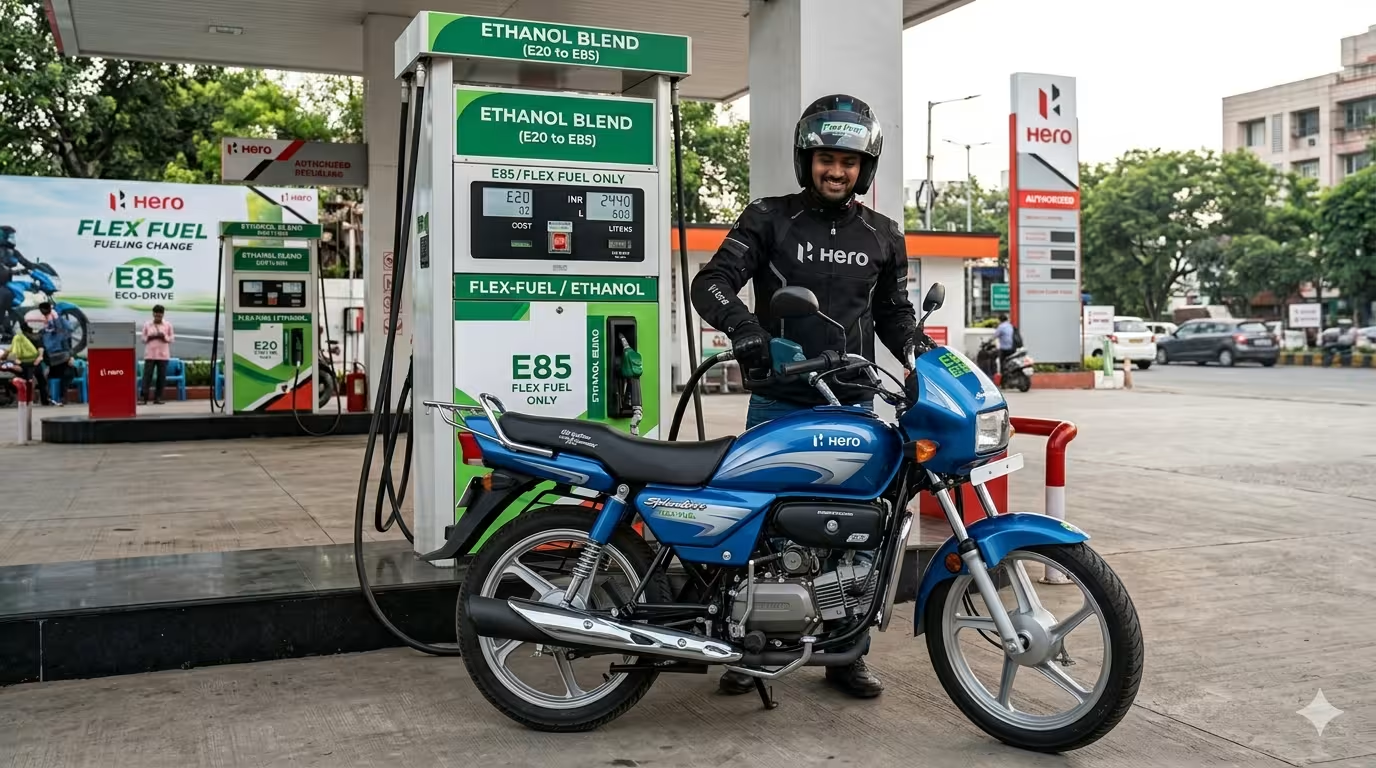
The Indian two-wheeler industry is undergoing a seismic shift toward sustainability, and Hero MotoCorp, the world’s largest motorcycle manufacturer by volume, is leading the charge. In a landmark announcement that sent ripples through the automotive sector, Hero MotoCorp unveiled its first-ever dedicated bio-fuel machines, marking a decisive pivot away from conventional petrol-only engineering. The launch of the HF Deluxe Flex Fuel variant and the Splendor Plus Flex Fuel model represents far more than just another product refresh; it signals a fundamental rethinking of how millions of Indians will power their daily commutes in the years ahead.
This move is significant not only because of the scale of Hero MotoCorp’s market presence, with over 100 million customers across the country, but also because of the strategic commitment the company has made: delivering ethanol-ready versions for all future configurations. In practical terms, every new Hero motorcycle and scooter rolling off production lines in the coming years will be engineered to accept bio-fuel blends right from the factory floor. This bold pledge positions Hero as the most aggressive mainstream manufacturer in India when it comes to embracing ethanol-based mobility solutions.
For everyday riders, fleet operators, and anyone interested in the intersection of affordable transportation and environmental responsibility, the implications are enormous. Flex-fuel technology promises reduced fuel costs, lower carbon emissions, and decreased dependence on imported crude oil, all without sacrificing the reliability and fuel efficiency that Indian commuters demand. In this comprehensive guide, we will break down everything you need to know about Hero’s flex-fuel models, the underlying technology, the broader market context, and what this means for the future of two-wheeled transportation in India.
Understanding Flex-Fuel Technology: The Engine Behind the Revolution
Before diving into the specifics of Hero’s new models, it is essential to understand what flex-fuel technology actually means and why it matters for the Indian context. A flex-fuel vehicle is designed to run on more than one type of fuel, typically a blend of petrol and ethanol. In India, the most common blend targeted by current policy is E20, which consists of 20 percent ethanol and 80 percent petrol. Ethanol, or ethyl alcohol, is a biofuel produced primarily from agricultural feedstocks such as sugarcane molasses, corn, and rice straw, making it a renewable resource that can be domestically sourced.
How Flex-Fuel Engines Differ from Conventional Ones
At first glance, a flex-fuel engine may look similar to a standard petrol engine, but several critical modifications set it apart. The fuel system components, including the fuel pump, fuel injectors, fuel lines, and fuel tank, must be upgraded with materials that resist the corrosive effects of ethanol. Ethanol has a higher octane number than petrol, which means it can withstand greater compression before igniting, potentially improving engine performance. However, ethanol also has a lower energy density, meaning a litre of ethanol contains roughly 30 percent less energy than a litre of petrol, which can result in slightly reduced fuel economy when running on higher ethanol blends.
The Engine Control Unit (ECU) in a flex-fuel vehicle is calibrated with advanced sensors that continuously monitor the ethanol content in the fuel mixture and adjust the air-fuel ratio, ignition timing, and injection pulses in real time. This ensures optimal combustion regardless of the blend ratio, whether you fill up with pure petrol, E20, E85, or any mixture in between. Hero MotoCorp has invested heavily in developing these smart calibration systems specifically for the cost-sensitive Indian market, ensuring that the flex-fuel capability does not come with a prohibitive price premium.
Why Ethanol? India’s Bio-Fuel Policy Context
India’s push toward ethanol blending is not happening in a vacuum. The government’s National Policy on Biofuels, updated in 2018 and further refined in subsequent years, sets ambitious blending targets: E10 by 2022 and E20 by 2025 for petrol. As of 2026, significant progress has been made, with many states already distributing E20 blends at fuel stations. The rationale behind this policy is multi-dimensional. First, India imports approximately 85 percent of its crude oil, creating a massive drain on foreign exchange reserves and exposing the economy to volatile global oil prices. Second, ethanol production supports the agricultural sector by creating additional demand for crops like sugarcane and maize, providing farmers with supplementary income. Third, burning ethanol produces fewer greenhouse gas emissions compared to petrol, contributing to India’s commitments under the Paris Climate Agreement.
Hero MotoCorp’s decision to launch dedicated flex-fuel models is perfectly timed with this national policy trajectory. By offering motorcycles that are factory-ready for E85 fuel, Hero is not just complying with anticipated regulations; it is staying ahead of the curve and giving consumers a future-proof product. The company’s pledge to make all future configurations ethanol-ready essentially means that buying a Hero motorcycle in 2026 and beyond is an investment in a vehicle that will remain compatible with the evolving fuel landscape for years to come.
Hero HF Deluxe Flex Fuel: The Mass-Market Bio-Fuel Pioneer
The HF Deluxe has long been one of Hero MotoCorp’s most trusted commuter motorcycles, known for its no-nonsense reliability, excellent fuel economy, and affordable pricing. The HF Deluxe Flex Fuel variant builds on this solid foundation while adding the crucial ability to run on E85 bio-fuel blends. This is not a concept bike or a limited-edition model; it is a production-ready machine aimed squarely at the heart of India’s commuter motorcycle market, which accounts for the vast majority of the approximately 15 million two-wheelers sold annually in the country.
Key Features and Specifications
At the core of the HF Deluxe Flex Fuel is a 97.2 cc, air-cooled, 4-stroke single-cylinder engine that produces a maximum power output of 5.9 kW at 8000 rpm and peak torque of 9.79 Nm at 6000 rpm. These figures are consistent with the petrol-only variant, which is an important point: transitioning to flex-fuel capability has not come at the cost of performance. The engine features Hero’s patented Programmed Fuel Injection (PGM-FI) system, which has been recalibrated to dynamically adjust to varying ethanol concentrations in the fuel. The fuel system has been comprehensively upgraded with ethanol-resistant materials, including stainless steel fuel lines, upgraded fuel pump internals, and a specially coated fuel tank that prevents corrosion from ethanol’s hygroscopic properties.
On the practical side, the HF Deluxe Flex Fuel retains all the commuter-friendly attributes that have made this model a best-seller. It features a comfortable upright riding position, a well-padded seat suitable for long commutes, tubeless tyres for added safety, and a maintenance-free battery. The fuel tank capacity of 9.6 litres provides a practical range, and the motorcycle delivers approximately 70 kmpl in pure petrol mode, with a modest reduction of around 5-7 percent when running on current E20 blend. The overall kerb weight remains light and manageable, making it suitable for riders of all experience levels and physical builds.
Target Audience and Market Positioning
The HF Deluxe Flex Fuel is positioned as the entry point into Hero’s bio-fuel ecosystem. Its primary audience includes daily commuters in tier-2 and tier-3 cities, small-town riders, rural users who may have easier access to ethanol-blended fuel from local cooperative sugar mills, and cost-conscious buyers who want to hedge against future petrol price increases. By offering flex-fuel capability at a price point that remains competitive with conventional petrol-only motorcycles, Hero is removing the traditional barrier to green technology adoption: cost. The HF Deluxe Flex Fuel is expected to carry a marginal premium of approximately 2,000 to 3,000 rupees over its petrol-only sibling, a difference that can be recovered through fuel savings within the first year of ownership.
Hero Splendor Plus Flex Fuel: An Icon Gets a Green Upgrade
If the HF Deluxe is Hero’s reliable workhorse, the Splendor Plus is the brand’s crown jewel. With over 30 million units sold since its introduction, the Splendor nameplate is arguably the most recognized motorcycle in India. The Splendor Plus Flex Fuel brings the same bio-fuel readiness to this iconic platform, and its significance cannot be overstated. When the best-selling motorcycle in the world’s largest two-wheeler market goes flex-fuel, it sends a powerful signal about the mainstreaming of bio-fuel technology.
What Sets the Splendor Plus Flex Fuel Apart
The Splendor Plus Flex Fuel shares its 97.2 cc engine platform with the HF Deluxe Flex Fuel, delivering identical power and torque figures. However, the Splendor Plus has always differentiated itself through a more refined riding experience, slightly better build quality, and a broader appeal that extends from rural commuters to urban riders who appreciate its classic design language. The Flex Fuel variant carries over all these qualities while adding the ethanol-compatible fuel system. The fuel tank is slightly larger at 9.8 litres, giving the Splendor Plus Flex Fuel a marginally longer range between fill-ups, which is a meaningful advantage for riders who cover long distances daily or live in areas where fuel stations are sparse.
One of the most notable aspects of the Splendor Plus Flex Fuel is its appeal to urban riders who may not have considered bio-fuel technology before. The Splendor brand carries immense trust and familiarity, and by offering a flex-fuel variant, Hero is making green technology accessible and non-intimidating. Riders do not need to learn new habits or worry about compatibility; they simply fill up with whatever fuel is available, and the motorcycle’s intelligent ECU takes care of the rest. This seamless user experience is critical for mass adoption, and Hero has clearly designed the Splendor Plus Flex Fuel with this philosophy in mind.
Comparison: HF Deluxe Flex Fuel vs. Splendor Plus Flex Fuel
While both motorcycles share the same core engine and flex-fuel technology, they cater to slightly different segments of the market. The following comparison table highlights the key differences and similarities between the two models:
| Feature | HF Deluxe Flex Fuel | Splendor Plus Flex Fuel |
| Engine Type | 97.2 cc, Air-Cooled, 4-Stroke | 97.2 cc, Air-Cooled, 4-Stroke |
| Fuel Compatibility | E85 (up to 85% Ethanol Blend) | E85 (up to 85% Ethanol Blend) |
| Max Power | 8.56 PS @ 8000 rpm | 8.56 PS @ 8000 rpm |
| Max Torque | 8.3 NM @ 6000 rpm | 8.3 NM @ 6000 rpm |
| Fuel Tank Capacity | 9.6 Litres | 9.8 Litres |
Note: Specifications are based on manufacturer announcements and may vary slightly at the time of retail launch. Mileage figures are approximate and depend on riding conditions, load, and fuel blend.
Hero’s Ethanol-Ready Commitment: What It Means for the Future
Perhaps the most consequential announcement from Hero MotoCorp is not about any single model but about the company’s overarching strategic direction. By committing to deliver ethanol-ready versions for all future configurations, Hero is effectively declaring that flex-fuel capability will become a standard feature across its entire product lineup, not an optional upgrade or a niche offering. This is a watershed moment for the Indian two-wheeler industry because it removes the uncertainty that consumers often face when considering new technology: the fear of obsolescence.
Impact on the Broader Two-Wheeler Ecosystem
When the world’s largest motorcycle manufacturer by sales volume makes a technology standard across its entire range, the ripple effects are felt throughout the supply chain, the dealer network, and the competitive landscape. Component suppliers will need to scale up production of ethanol-compatible parts, which should drive down costs through economies of scale. Fuel station operators will have greater confidence in investing in E85 dispensing infrastructure, knowing that a growing proportion of the two-wheeler parc can utilize the fuel. Competitors will face competitive pressure to follow suit or risk being perceived as technologically behind. Already, other major manufacturers including Bajaj Auto and TVS Motor Company have announced their own flex-fuel development programs, though none has matched Hero’s across-the-board commitment.
For consumers, the standardization of flex-fuel capability means simpler purchase decisions. Instead of weighing whether to pay extra for a flex-fuel variant, buyers can simply choose the Hero model that best fits their needs and budget, knowing that ethanol compatibility is built in. This eliminates a key friction point that has slowed the adoption of alternative fuels in price-sensitive markets. It also means that the secondary market for used motorcycles will gradually shift toward ethanol-ready machines, creating a positive feedback loop that accelerates the transition away from petrol-only vehicles.
Challenges and Roadblocks Ahead
Despite the promising outlook, several challenges remain. The availability of E50 or E80 fuel at retail stations across India is still unavailable. This creates a chicken-and-egg problem: consumers are hesitant to buy flex-fuel vehicles if the fuel is not readily available, and fuel retailers are hesitant to invest in infrastructure if the demand is uncertain. Additionally, the seasonal nature of ethanol production, which depends on sugarcane harvests, can lead to supply fluctuations and price volatility. Hero MotoCorp and the broader industry will need to work closely with government agencies, oil marketing companies, and agricultural cooperatives to address these supply-side challenges.
There are also technical challenges related to cold-start performance in northern India during winter months, as ethanol has a higher latent heat of vaporization compared to petrol, which can make starting more difficult in low temperatures. Hero’s engineers have been working on optimized cold-start calibration strategies, but this remains an area of ongoing development. Furthermore, consumer education is critical; many riders are unfamiliar with flex-fuel technology and may have misconceptions about its impact on engine life, maintenance costs, and warranty coverage. Hero’s dealer network will need to play a significant role in addressing these concerns through transparent communication and after-sales support.
Environmental and Economic Benefits of Flex-Fuel Motorcycles
The environmental case for flex-fuel motorcycles is compelling. Ethanol-blended fuel produces significantly lower emissions of harmful pollutants compared to conventional petrol. Studies conducted by the Indian Institute of Petroleum and other research institutions have shown that E20 fuel can reduce carbon monoxide emissions by approximately 30 percent, hydrocarbon emissions by about 20 percent, and particulate matter emissions by roughly 25 percent compared to pure petrol. Given that two-wheelers account for a substantial share of vehicular pollution in Indian cities, even a modest shift toward ethanol-blended fuel could have a measurable impact on urban air quality.
Economic Advantages for Everyday Riders
From an economic perspective, flex-fuel motorcycles offer several tangible benefits. Ethanol is typically priced lower than petrol on a per-litre basis, and the government provides additional fiscal incentives for bio-fuel adoption, including reduced excise duties on ethanol-blended fuel. For a typical commuter covering 1,500 kilometres per month, the fuel cost savings from using E20 instead of pure petrol could range from 300 to 500 rupees per month, depending on local fuel prices and riding patterns. Over the typical five-year ownership period, this translates to cumulative savings of 18,000 to 30,000 rupees, which is significant for the target demographic of these motorcycles.
Beyond individual savings, the macroeconomic benefits are equally important. Increased ethanol blending reduces India’s dependence on imported crude oil, which currently accounts for a substantial portion of the country’s trade deficit. By diverting a portion of the transportation fuel demand to domestically produced ethanol, India can retain more capital within its own economy, support rural employment, and reduce vulnerability to geopolitical disruptions in global oil supplies. The agricultural sector benefits directly, as ethanol production creates a steady demand for sugarcane, maize, and other feedstocks, providing farmers with an additional revenue stream and reducing the distress associated with fluctuating crop prices.
What This Means for You: A Buyer’s Perspective
If you are in the market for a new commuter motorcycle, the launch of Hero’s flex-fuel models should factor prominently into your decision-making process. Here are the key takeaways for prospective buyers. First, both the HF Deluxe Flex Fuel and the Splendor Plus Flex Fuel offer the same proven performance and reliability as their petrol-only counterparts, with the added benefit of future fuel flexibility. There is no performance penalty for choosing the flex-fuel variant, and the marginal price premium is negligible in the context of the total cost of ownership.
Second, even if E85 fuel is not currently available in your area, buying a flex-fuel motorcycle is a forward-looking investment. As India’s ethanol blending programme expands, the availability of higher-blend fuels will increase, and your motorcycle will be ready to take advantage of them without any modification. Third, the resale value of flex-fuel motorcycles is expected to be stronger than that of petrol-only models as the fuel transition accelerates, because used-car buyers will increasingly prefer vehicles that are compatible with the newer fuel blends. Fourth, Hero’s extensive service network, with over 11,000 customer touchpoints across India, ensures that maintenance and support for these flex-fuel models will be readily accessible even in smaller towns and rural areas.
Frequently Asked Questions
Can I use regular petrol in a Hero flex-fuel motorcycle?
Yes, absolutely. Hero’s flex-fuel motorcycles are designed to run on any blend of petrol and ethanol, from pure petrol (E0) up to E85. The intelligent fuel management system automatically detects the ethanol content and adjusts the engine parameters accordingly. You can switch between different fuel types at any time without any manual intervention or concerns about engine damage.
Does using E20 fuel affect the mileage of the motorcycle?
There is a modest reduction in fuel economy when using E20 compared to pure petrol, typically in the range of 5 to 7 percent. This is because ethanol has a lower energy density than petrol. However, the lower per-litre cost of E20 fuel often offsets this reduction, resulting in comparable or even lower per-kilometre running costs. The exact impact depends on local fuel prices and individual riding patterns.
Is there any special maintenance required for flex-fuel motorcycles?
No special maintenance is required beyond the regular service schedule. Hero has engineered the fuel system components to withstand the corrosive effects of ethanol over the full lifecycle of the motorcycle. Standard periodic maintenance, including oil changes, air filter cleaning, and spark plug replacement, should be performed as per the owner’s manual, just as with any conventional motorcycle.
Will Hero offer flex-fuel variants of premium models like Xtreme and Karizma?
Hero MotoCorp has committed to making all future configurations ethanol-ready, which strongly suggests that upcoming models and refreshed versions across all segments, including premium and performance categories, will feature flex-fuel capability. Specific launch timelines for individual models have not been announced, but the strategic direction is clear and unequivocal.
The Road Ahead: Flex-Fuel as the New Normal
Hero MotoCorp’s launch of the HF Deluxe Flex Fuel and Splendor Plus Flex Fuel models, combined with its commitment to ethanol readiness across all future products, represents a pivotal moment in the evolution of Indian two-wheeler mobility. This is not a token gesture or a compliance-driven checkbox exercise; it is a strategic transformation that aligns the company’s product roadmap with the country’s energy security goals, environmental imperatives, and agricultural development priorities. By making flex-fuel technology accessible at the mass-market price point, Hero is democratizing green mobility in a way that few other manufacturers have attempted.
The success of this initiative will depend on several factors beyond Hero’s control, including the pace of E80 fuel rollout, the consistency of ethanol supply, and the government’s continued policy support for bio-fuel adoption. However, the trajectory is unmistakable. India is moving toward a higher-ethanol future, and Hero MotoCorp has positioned itself at the vanguard of this transition. For consumers, the message is clear: the next motorcycle you buy will likely be flex-fuel compatible, and that is not just good for the planet, it is good for your wallet too. The era of sustainable, affordable two-wheeler mobility has arrived, and it bears the Hero badge.
Disclaimer: This blog post is intended for informational purposes only. Specifications, pricing, and availability of Hero flex-fuel models are subject to change based on official manufacturer announcements. Please consult your nearest Hero MotoCorp dealership for the most current information. Fuel economy figures are approximate and vary based on riding conditions, maintenance, and fuel blend.