How to Choose a Motorcycle Helmet in India
Choosing a motorcycle helmet is not simply about picking a design you like or buying the most expensive option you can afford. A helmet needs to fit correctly, meet the applicable safety requirements, and suit the kind of riding you actually do.
This guide explains the main helmet types, safety standards, fit and sizing, useful features, common mistakes, and what to consider when deciding how much to spend on a motorcycle helmet in India.
Why Choosing the Right Motorcycle Helmet Matters
A motorcycle helmet is one of the most important pieces of protective equipment a rider can buy. Its purpose is to help reduce the risk and severity of head injuries in a crash, but its effectiveness depends on more than the shell itself. The helmet needs to fit securely, stay properly fastened, and be appropriate for the type of riding you do.
A good helmet should also be practical enough that you will actually wear it consistently. Weight, ventilation, visibility, noise, visor operation and comfort can all affect the riding experience. The goal is not simply to find a helmet with the longest feature list, but to find one that combines appropriate protection, correct fit and useful features for your riding conditions.
Types of Motorcycle Helmets
Motorcycle helmets come in several designs, and each type offers a different balance of coverage, convenience, ventilation and visibility. The right choice depends on your riding style, road conditions and how often you use the helmet.
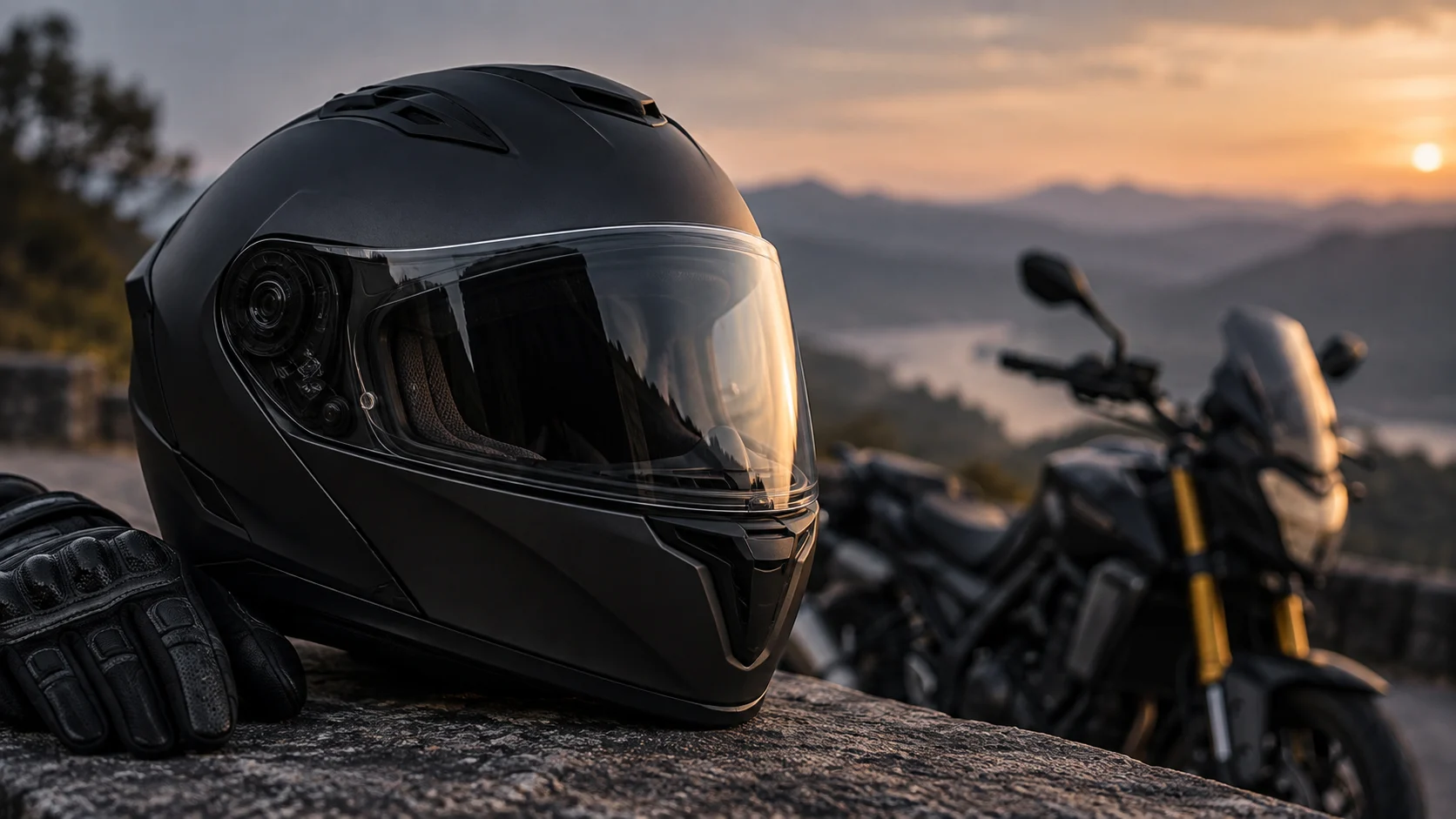
Full-face helmets cover the head, sides of the face and chin area with a fixed chin bar. They are commonly used for everyday road riding, touring and highway use because they provide coverage around more of the head and face.
Modular helmets have a movable chin section that can be raised when stopped or when additional convenience is needed. When choosing one, check how the manufacturer specifies the helmet for use, particularly whether it is intended to be ridden with the chin section raised or lowered.
Open-face or 3/4 helmets cover the head and sides of the face but leave the chin and much of the face exposed. They can provide a more open riding experience, but their coverage is different from that of a full-face helmet.
Half helmets provide substantially less coverage than full-face and open-face designs. Their reduced coverage means you should pay close attention to exactly which areas of the head the particular helmet is designed to protect.
Off-road and motocross helmets are designed around off-road riding and typically have features such as an extended chin area and a visor peak. They are a specialised choice and may not be the most practical option for normal road commuting.
Dual-sport or adventure helmets combine features associated with road and off-road helmets. Depending on the design, they may include a peak, larger eye opening and compatibility with goggles or a road visor.
Check the Helmet Safety Standard
In India, check that a motorcycle helmet conforms to the applicable BIS standard before considering its design, features or price. BIS currently lists IS 4151:2015, Protective helmets for motorcycle riders – Specification (Fourth Revision) for motorcycle helmets.
The Helmet for Riders of Two Wheeler Motor Vehicles (Quality Control) Order, 2020 requires covered helmets to conform to the applicable Indian Standard and bear the BIS Standard Mark under a BIS licence. The order came into force on 1 June 2021.
When buying a helmet, look for the required BIS Standard Mark and check the information provided by the manufacturer. Do not rely only on a product title, seller description or a photograph containing an “ISI” logo. The BIS standard covers requirements including construction, sizing, peripheral vision, workmanship, mass and retention-system testing.
It is also worth checking whether the helmet and manufacturer information are consistent with the certification details available through BIS resources. This is particularly useful when buying online, where product listings can contain incomplete, outdated or inaccurate information.
Safety certification is only one part of choosing a helmet. A certified helmet can still be unsuitable if the size is wrong, the fit is insecure, or the helmet is damaged. Treat the standard as a basic requirement, then evaluate fit, condition and suitability for your riding.
Get the Right Helmet Fit and Size
A helmet should fit snugly and evenly around your head without creating painful pressure points. Helmet sizing varies between manufacturers, so do not assume that your usual helmet size will be the same across every brand or model.
Start by measuring the circumference of your head with a flexible measuring tape. Place the tape just above your eyebrows and take it around the widest part of the back of your head. Compare the measurement with the size chart provided by the helmet manufacturer.
Once you put the helmet on, it should feel snug around the crown of your head and reasonably firm around the cheeks. It should not move excessively when you shake or turn your head. At the same time, you should not have sharp or concentrated pressure points on your forehead, temples or other areas.
Head shape also matters. Two helmets with the same stated size can feel very different because their internal shapes are different. If a helmet consistently creates pressure in one particular area even after you have checked the size, the shape may simply not suit your head.
If possible, wear the helmet for several minutes before buying it. Pressure points that are not obvious immediately can become uncomfortable during a longer ride. Check the fit with the chin strap correctly fastened and follow the manufacturer’s fitting instructions.
Avoid modifying the helmet’s protective structure or adding unapproved materials inside it to force a better fit. If the supplied liner or cheek pads are designed to be replaceable or adjustable, use only components approved by the manufacturer.
Helmet Features Worth Considering
Once safety, certification and fit are covered, you can compare the features that affect everyday use. Not every extra feature is necessary, and a longer specification list does not automatically make one helmet more suitable than another.
Ventilation: Air vents can improve airflow through the helmet and make riding more comfortable, particularly in hot weather. Check both the intake and exhaust ventilation design rather than simply counting the number of vents.
Visor: Look for a clear, practical field of view and a visor system that is easy to operate. Check whether replacement visors are available and whether the manufacturer specifies any particular care or cleaning requirements.
Sun protection: Some helmets include an internal sun visor. This can be convenient for changing light conditions but check that operating the mechanism is easy while wearing gloves and that it does not interfere with your normal field of view.
Chin strap and retention system: The retention system needs to be easy to fasten correctly and should remain secure during normal use. Different helmets may use different fastening mechanisms, so make sure you understand how the particular system works before buying.
Weight: Helmet weight can affect comfort, especially during longer rides. Compare the stated weight of similar helmet sizes where the manufacturer provides the information rather than assuming that a lighter helmet is automatically the better choice.
Noise: Wind noise varies between helmets and depends on factors such as helmet design, motorcycle type, riding position and speed. If you regularly ride at higher speeds, consider reviews that specifically discuss noise rather than relying on marketing descriptions.
Removable and washable liners: Removable interior padding can make cleaning easier and can be useful for riders who use their helmet frequently. Check whether replacement liners and cheek pads are available for the specific model.
Intercom compatibility: If you use a Bluetooth intercom, check whether the helmet has suitable speaker pockets or manufacturer-approved provisions for installing the system. Avoid assuming that every helmet will accommodate every communication device neatly.
Eyewear compatibility: Riders who wear prescription glasses should check how comfortably their glasses fit with the helmet. The frame should not create excessive pressure or interfere with the helmet’s normal fit.
What to Avoid When Buying a Helmet
Buying a helmet based only on appearance or price can lead to a poor choice. Before paying, check the helmet itself, the seller information and the manufacturer’s specifications.
Avoid helmets with an obviously poor fit. A helmet that is too loose can move around excessively, while one that creates painful pressure points may become difficult to wear consistently.
Avoid damaged helmets. Do not buy a helmet with visible cracks, significant impact damage, damaged straps or other structural problems. If a helmet has been involved in a crash, follow the manufacturer’s guidance about whether it needs to be replaced.
Avoid relying only on marketplace claims. Product listings can contain incomplete or inaccurate information. Verify important specifications such as certification, model name and size using the manufacturer’s information and relevant certification resources.
Avoid buying counterfeit or suspiciously cheap products. An unusually low price is not proof that a helmet is counterfeit, but it is a reason to check the seller, product information and certification carefully.
Avoid assuming that more features mean better protection. Features such as internal sun visors, ventilation systems and communication compatibility can improve convenience, but they should not replace checking certification, fit and overall suitability.
Avoid making modifications that can affect the helmet. Do not drill, cut or otherwise alter the protective shell or install components that are not approved by the manufacturer.
Avoid buying without considering replacement parts. Visors, liners, cheek pads and other components can wear out or become damaged. Before choosing a helmet you intend to use for years, check whether the manufacturer provides appropriate replacement parts.
How Much Should You Spend on a Motorcycle Helmet?
There is no single price that guarantees that a motorcycle helmet is right for every rider. Instead of setting your budget around a particular brand or appearance, start with the requirements that matter most: applicable certification, correct fit, suitable coverage and a condition that is appropriate for use.
A very cheap helmet may look attractive from a budget perspective, but price alone does not tell you whether the helmet is suitable. Check the certification and manufacturer information before comparing features or styling.
At the other end of the market, more expensive helmets may offer additional features, materials, finishing, ventilation systems, weight reductions, visor systems or interior options. These can improve convenience and comfort, but you should decide whether those benefits are relevant to your own riding rather than paying simply for a higher price tag.
For a daily commuter, spending more on features that improve comfort and make the helmet easier to live with may be worthwhile if the basic safety and fit requirements are already satisfied. For occasional riders, some premium features may provide less practical value.
The best way to set a helmet budget is therefore to establish a minimum standard first, then compare helmets within the amount you are comfortable spending. Never compensate for a poor fit or questionable certification by choosing a more expensive model.
Motorcycle Helmet Buying Checklist
Before buying a motorcycle helmet, run through this checklist:
- Certification: Confirm that the helmet meets the applicable safety requirements and carries the required BIS Standard Mark for the Indian market.
- Correct size: Measure your head and compare it with the manufacturer’s size chart.
- Secure fit: Make sure the helmet fits snugly without painful pressure points or excessive movement.
- Suitable coverage: Choose a helmet design that provides the coverage appropriate for your riding.
- Retention system: Check that the chin strap or other retention system works correctly and can be fastened securely.
- Condition: Avoid helmets with visible damage, cracks, damaged straps or signs of previous impact.
- Visor: Check visibility, operation and the availability of replacement parts.
- Ventilation: Consider whether the ventilation system is suitable for your climate and riding conditions.
- Comfort: Wear the helmet for several minutes if possible to identify pressure points before purchasing.
- Features: Consider useful extras such as a sun visor, removable liner or communication-system compatibility based on your actual needs.
- Replacement parts: Check whether liners, cheek pads and visors are available for the model.
- Seller: Buy from a reputable seller and verify important product information rather than relying entirely on a marketplace listing.
- Price: Compare the helmet’s certification, fit, construction and useful features rather than choosing solely by price.
A helmet that meets the basic requirements, fits correctly and suits your riding is a more sensible purchase than one chosen purely because it looks good or has the longest specification list.
Frequently Asked Questions
What type of motorcycle helmet should I buy in India?
Choose a helmet based on your riding style, required coverage, fit and applicable safety requirements. Full-face, modular, open-face, off-road and dual-sport helmets are designed for different uses, so the most suitable type depends on how and where you ride.
How do I know if a motorcycle helmet fits correctly?
A correctly fitted helmet should feel snug and secure without creating painful pressure points. It should not move excessively when you turn or shake your head. Always compare your head measurement with the manufacturer’s size chart because sizing varies between brands and models.
Is an ISI-marked helmet required in India?
Helmets covered by India’s applicable two-wheeler helmet regulations are required to conform to the relevant Indian Standard and bear the BIS Standard Mark under a BIS licence. For motorcycle riders, BIS currently lists IS 4151:2015 for protective helmets.
Should I buy a cheap motorcycle helmet?
Price should not be the only factor. Check certification, fit, condition, coverage and manufacturer information first. A lower-priced helmet can still be suitable if it meets the applicable requirements and fits correctly, while a more expensive helmet is not automatically the right choice.
How often should I replace a motorcycle helmet?
Follow the helmet manufacturer’s replacement guidance and inspect the helmet regularly. A helmet should be replaced after a significant impact or when it has visible damage or deterioration. Check the manufacturer’s instructions for the specific model.
Can I buy a motorcycle helmet online?
Yes, but check the manufacturer’s specifications, size chart, certification information and seller details before purchasing. Make sure the seller has a suitable return or exchange policy in case the helmet does not fit correctly.
Are expensive motorcycle helmets safer?
Price alone does not establish the level of protection provided by a helmet. Start with the applicable certification and correct fit, then compare construction, coverage and features that are relevant to your riding.
Final Thoughts
Choosing a motorcycle helmet in India does not need to be complicated, but it does require more than comparing colours, brands and prices.
Start by checking the applicable safety requirements and certification. Then focus on getting the correct size and a secure, comfortable fit. After those basics are covered, consider the helmet type, ventilation, visor, weight, comfort and other features based on the kind of riding you actually do.
A sensible helmet purchase is one that meets the required standard, fits correctly, provides suitable coverage and is practical enough for you to wear consistently. Take the time to compare the details before buying rather than making the decision based only on appearance or a discount.
The helmet is one of the most important pieces of riding equipment you will buy. Treat it accordingly.