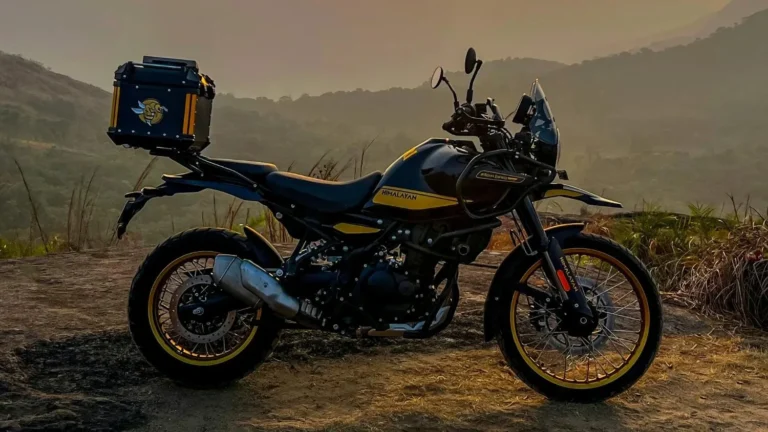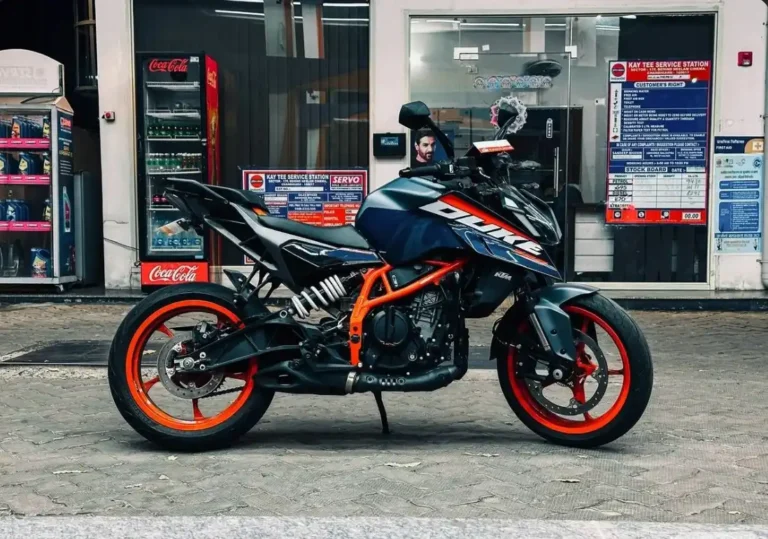
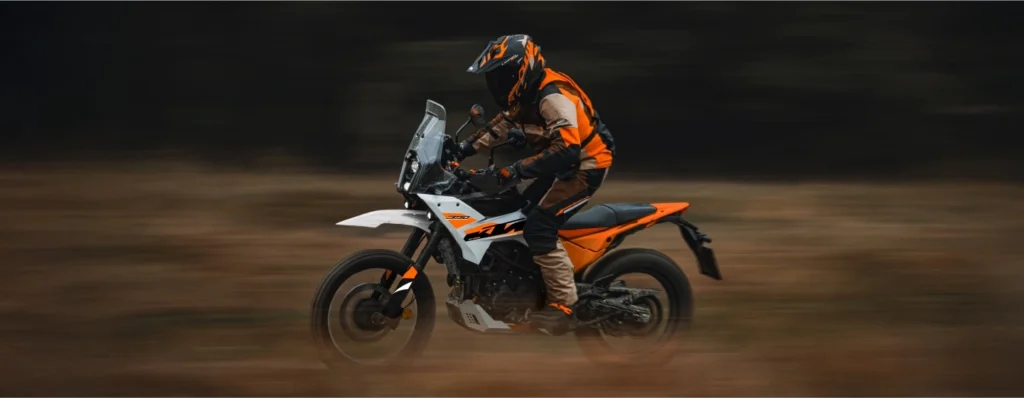
For years, we waited for a true Adventure bike from KTM in the 390 segment. The previous generation, often described as a “dressed up Duke 390” and one of the worst motorcycles KTM ever made, felt like a compromise. Now, after spending 1000 km on the new model, we can confirm: the 2025 KTM 390 Adventure (also known as the 390 Adventure S in some places) is the “true orange Adventure” we’ve been waiting for, fixing virtually all the issues of its predecessor.
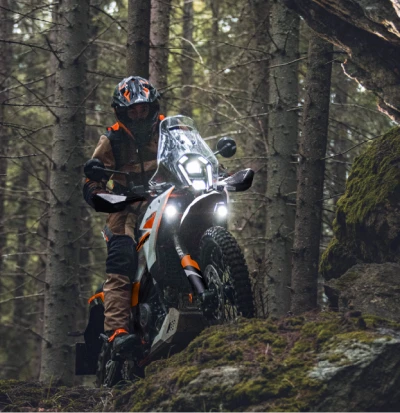
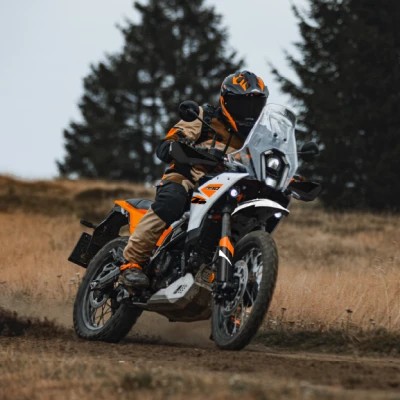
The biggest secret to the new 390 Adventure’s success lies in its completely redesigned frame and chassis, which addresses the fundamental height challenges of the previous model. By compressing the motorcycle’s “waist” vertically, KTM was able to achieve ground clearance and a reasonable seat height simultaneously.
This design results in an almost 60 mm advantage when combining seat height reduction and ground clearance increase. Despite its large, Dakar-inspired look, the bike feels “Big”, but not heavy big. It feels super skinny and narrow on saddle, and the feeling of weightlessness is immediate, both at standstill and on the move.
Crucially, the new frame has “good bones,” designed to be a Level 4 frame, capable of supporting hardcore off-road use with further suspension tuning and upgrade.
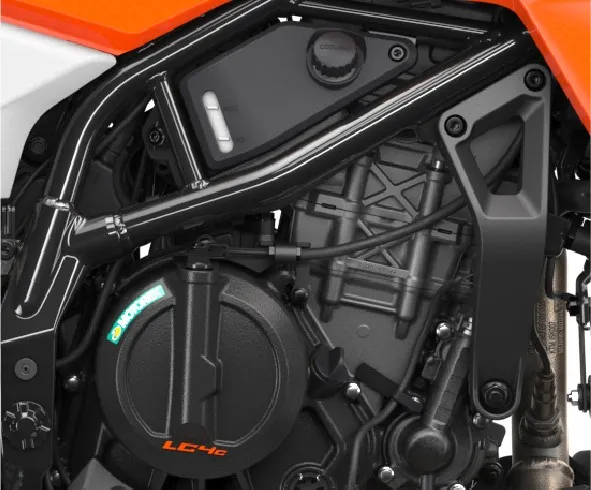
The 390 Adventure uses the same engine platform as the Gen 3 KTM 390 Duke, with zero mechanical changes to the hardware. To optimize it for touring and off-road exploration, KTM implemented fresh ignition maps (which are not frantic or exciting like Duke) and added three extra teeth to the rear sprocket (now 14/46).
Key Engine Highlights:
- Tractability: The previous issue of poor grunt at low revs, which caused the engine stalling, is solved. Additionally, the bike features a “crawl mode” that supports the revs to prevent stalling during tricky off-road climbs or in heavy traffic.
- The Sweet Spot: The engine is very tractable and happy at low speeds but truly wakes up around 5500 RPM. It is extremely composed and purposeful when traveling between 80 to 120 km/h.
- Refinement: While smooth in the right places, this high-performance single-cylinder engine is not fundamentally “smooth”. The vibration primarily manifests through the foot pegs, and the engine note is described as slightly more metallic than the Duke 390. However, for those worried about refinement in this class, all 40 BHP 400cc singles currently face similar challenges due to the nature of their design.
- Fuel Efficiency Surprise: Despite the 14 L fuel tank seeming small for a tourer, the bike delivers excellent real-world mileage. While the economy claim is 26 kmpl, an easier pace ride between 80 to 100 km/h yielded 31 kmpl. Consistent riding at 110 to 120 km/h saw figures of 22-25 kmpl. This economy means a genuine, real-world 360 km range is easily possible on a tank full.
This bike is loaded with standard technology and features, providing an invisible safety net for riders.
- Electronics: It comes equipped with IMU-equipped electronics. Key features include cruise control as standard (a necessity for long highway sections), traction control (which is extremely useful on unpredictable Indian surfaces), and switchable ABS. The three riding modes are Rain, Street, and Off-road (off-road mode is the most direct and aggressive throttle map). Notably, all settings are remembered if the bike turned off, even off-road mode is not reset unlike old 390 Adventure.
- Quickshifter: Among the smoothest in the segment.
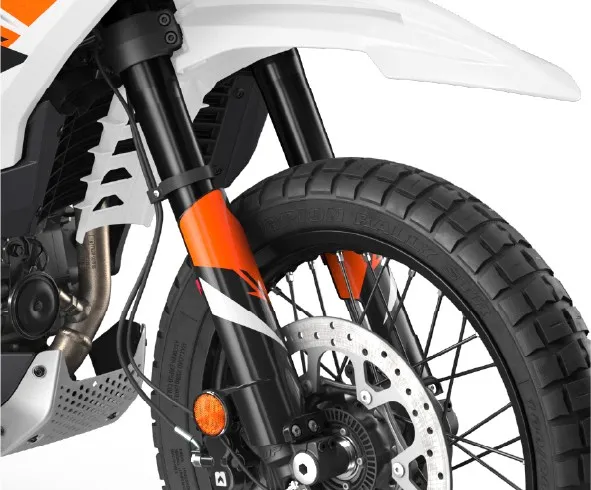
- Suspension: The suspension has been sorted. It offers 200 mm of travel and is fully adjustable (compression and rebound in front; rebound and preload at the back). While not as “plush” or “silky smooth” as the Royal Enfield Himalayan over small bumps, but the KTM’s approach provides crucial feedback to the rider while still absorbing everything.
- Braking: The bike uses axial brakes, which KTM claims is intentional. This design offers a softer initial bite, making modulation easier, especially off-road, before the full performance kicks in.
- Tyres and Wheels: It rides on Apollo Trampler tires, which are brilliant. It also features tubeless spoke wheels (Front: 90/90-21, Rear: 130/80-17), utilizing a patented KTM system involving tape and a rubber clip, which is cost-effective and simple.
- Pillion/Luggage: While designed primarily for long-distance solo touring, the bike is touring-ready and has sufficient payload carrying capacity. However, the pillion seat is narrower and less spacious than the previous generation, meaning your partner might need to be “keen to come along”.
Pros:
- Huge improvement over older model
- Feels lighter and more confidence-inspiring
- Excellent ground clearance with lower usable seat height
- Great for touring
- Cruise control + IMU based electronics package
- Better fuel efficiency and tank range
Cons:
- Vibrations (not a deal-breaker)
- Not ideal for pillions on long rides
- Limited luggage mounting options
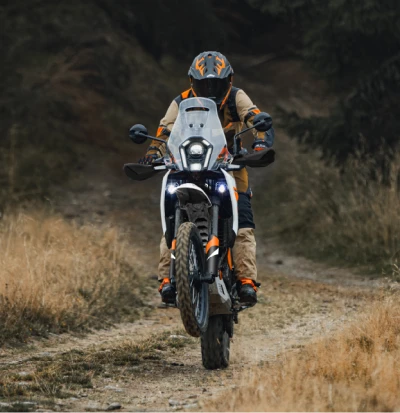
The new KTM 390 Adventure is a great all-rounder and a fantastic single-bike garage option. It is a travel motorcycle fundamentally, but its off-road ability has been dramatically improved to where it should have been initially.
What makes this package truly incredible is the price: it costs only 6,000 rupees more than the outgoing model. For all the additional ability, equipment (including cruise control and IMU electronics), and the introduction of the true Spirit of Adventure, this is a massively good deal.
For riders with an aggressive off-road agenda, we suggest you to go for the 390 Adventure R model (which features 230 mm suspension travel, 870 mm seat height, and 272 mm ground clearance). However, for the majority of riders focused on touring with significant off-road capability, this Adventure is the right bike now.
If you want a nimble travel machine that can handle broken terrain without drama, this is the one.
Engine and Transmission
| Engine Type | 4-Stroke, Single Cylinder, DOHC |
| Displacement | 398.63 cc |
| Power | 46 PS @ 8500 rpm 39 Nm @ 6500 rpm |
| No. of Cylinders | 1 |
| Cooling System | Liquid Cooled |
| Valve Per Cylinder | 4 |
| Starting | Self Start Only |
| Fuel Supply | Fuel Injection |
| Clutch | Assist And Slipper Clutch |
| Gear Box | 6 Speed |
| Bore | 89 mm |
| Stroke | 64 mm |
| Compression Ratio | 12.71:1 |
| Emission Type | BS6-2.0 |
| Gear Shifting Pattern | 1 Down 5 Up |
| Spark Plugs | 1 Per Cylinder |
| Caliper – Front | 2 Piston |
| Caliper – Rear | 1 Piston |
Dimensions
| Fuel Capacity | 14.5 L |
| Fuel Reserve | 2.9 L |
| Saddle Height | 830 mm |
| Ground Clearance | 237 mm |
| Wheelbase | 1470 mm |
| Kerb Weight | 182 kg |
| Pillion Seat | Yes |
| Pillion Grab Rail | Yes |
Suspension/Wheels/Brake
| Suspension Front | WP Apex USD Open Cartridge Fork, 43 mm, 200 mm Travel Fully Adjustable For Compression And Rebound Damping (30-Step) |
| Suspension Rear | WP Monoshock, 205 mm Wheels Travel Adjustable For Rebound Damping (20-Click) And Preload (10-Step) |
| Brakes Front | Disc |
| Brakes Rear | Disc |
| ABS | Dual Channel (Switchable) |
| Tyre Size | Front: 90/90-21, Rear: 130/80-17 |
| Wheel Size | Front: 533.4 mm, Rear: 431.8 mm |
| Wheels Type | Spoke |
| Frame | Split – Trellis Frame |
| Tyre Type | Tubeless |